

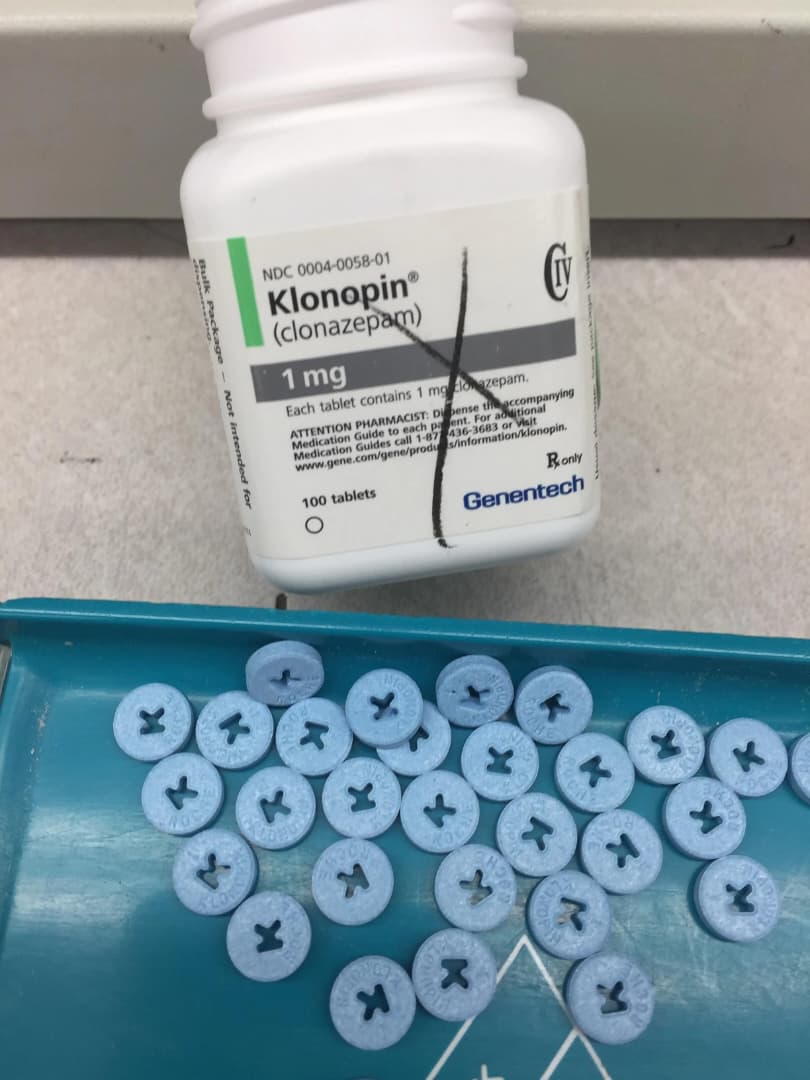
Understanding Klonopin (Clonazepam): A Trusted Standard in Neurological Research
In the realm of pharmaceutical science, few compounds have demonstrated the versatility and enduring relevance of Klonopin (Clonazepam) . As a cornerstone of neurological research, this benzodiazepine derivative continues to be a subject of extensive study for its profound effects on the central nervous system. At Health Aid Pharmacy Inc, we are committed to providing researchers with comprehensive, accurate information about this significant compound to support their vital work .
What Is Klonopin?
Klonopin, the branded formulation of clonazepam, belongs to the benzodiazepine class of compounds—a group known for their depressant effects on the central nervous system. First approved by the FDA in 1975, it has since become one of the most studied molecules in its category . Unlike many modern synthetic compounds, clonazepam’s long history provides researchers with a wealth of pharmacokinetic data, making it a reliable reference standard in experimental settings. It is available in various forms, including scored tablets and orally disintegrating wafers, typically containing 0.5 mg, 1 mg, or 2 mg of the active ingredient .
Mechanism of Action: How It Works
The scientific intrigue surrounding Klonopin lies in its specific mechanism of action. Clonazepam works by enhancing the activity of gamma-aminobutyric acid (GABA), the primary inhibitory neurotransmitter in the human brain . It binds to benzodiazepine receptors at the GABA-A ligand-gated chloride channel complex. When GABA attaches to its receptor, clonazepam facilitates an increased frequency of chloride channel opening. This influx of chloride ions causes hyperpolarization of the neuron, making it less excitable . For researchers, this GABAergic modulation provides a critical pathway for studying neuronal inhibition, seizure activity, and anxiety-related neural circuits.
Benefits and Advantages in Research
For the scientific community, Klonopin offers distinct advantages. Its high bioavailability—approximately 90% following oral administration—ensures consistent and predictable results in absorption studies . With a long and well-documented elimination half-life of 30 to 40 hours, it allows for sustained observation periods in pharmacokinetic modeling . Furthermore, its ability to penetrate the blood-brain barrier efficiently makes it an ideal candidate for research into central nervous system disorders, including the study of seizure spread and the neurobiology of panic .
Safety and Responsible Usage Considerations
At Health Aid Pharmacy Inc, we prioritize the integrity of research above all. It is imperative for laboratory personnel to handle clonazepam with the utmost respect for its potency. As a central nervous system depressant, it is known to cause dose-dependent sedation and ataxia in test subjects . Researchers must be aware of the compound’s potential for physical dependence and the importance of gradual withdrawal in chronic studies to observe accurate physiological responses . Due to its Schedule IV controlled status, strict adherence to handling protocols and institutional guidelines is essential to ensure laboratory safety and compliance .
Longevity and Storage Life
To maintain the chemical integrity of Klonopin for research, proper storage is non-negotiable. The compound should be stored at controlled room temperature, ideally between 20°C and 25°C (68°F to 77°F) . It must be kept in its original, tightly closed container, protected from light, moisture, and excessive heat. When stored under these ideal conditions, the typical shelf life of clonazepam tablets extends up to 3 years from the date of manufacture . Researchers should always verify expiration dates prior to experimentation to ensure the validity of their data.
Ingredients / Composition
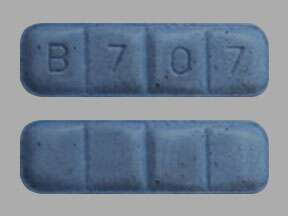
Understanding the complete composition is vital for research reproducibility. Each Klonopin tablet contains the active ingredient clonazepam. The standard tablet formulation also includes inactive ingredients such as lactose, magnesium stearate, microcrystalline cellulose, and corn starch. Specific dosages may contain colorants for identification, such as FD&C Yellow No. 6 Lake (0.5 mg) or FD&C Blue No. 1 and No. 2 Lakes (1 mg and 2 mg) .
Usage Areas for Research Purposes
The scope of clonazepam research is broad and deep. Current scientific literature highlights its use in:
-
Neurological Studies: Investigating anticonvulsant activity in models of Lennox-Gastaut syndrome, myoclonic, and absence seizures .
-
Behavioral Research: Exploring the attenuation of panic responses and the neurochemical basis of anxiety disorders .
-
Neuropharmacology: Serving as a standard ligand in binding assays to study GABA-A receptor kinetics and drug interactions .
By choosing Klonopin from Health Aid Pharmacy Inc, researchers gain access to a pharmaceutical-grade reference standard backed by decades of clinical and laboratory data. We invite you to explore our catalog and see why the global research community trusts us as their partner in scientific advancement.
For more information on our comprehensive range of research compounds, please visit our homepage.



There are no reviews yet.