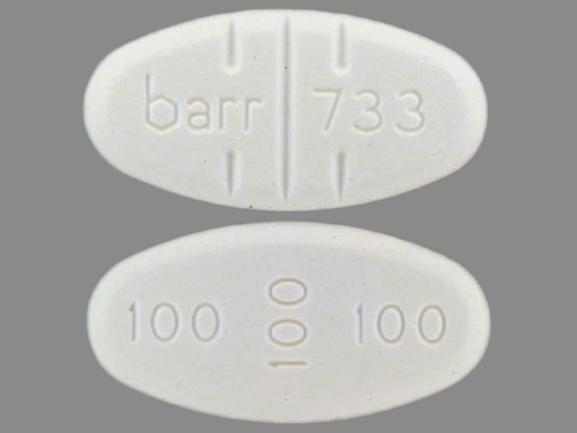
Understanding Trazodone Hydrochloride
Trazodone Hydrochloride research: Are you suffering from Depression; Sedation; Major Depressive Disorder ? Trazadone medication is used to treat depression. It may help to improve your mood, appetite, and energy level as well as decrease anxiety and insomnia related to depression. Trazodone works by helping to restore the balance of a certain natural chemical (serotonin) in the brain. It belongs to the drug class phenylpiperazine antidepressants. Risk cannot be ruled out during pregnancy. Trazodone 300 mg is not a controlled substance under the Controlled Substances Act (CSA).
How to use Trazodone HCL
Read the Medication Guide provided by your pharmacist before you start using trazodone and each time you get a refill. If you have any questions, consult your doctor or pharmacist.
Take this medication by mouth after a meal or snack as directed by your doctor, usually once or twice daily. If drowsiness is a problem and you are taking 1 dose daily, take it at bedtime. If you are taking 2 doses each day, it may help to take 1 of the doses at bedtime. Follow your doctor’s directions carefully.
Dosage is based on your medical condition and response to treatment. To reduce your risk of side effects, your doctor may start you at a low dose and gradually increase your dose.
Take this medication exactly as prescribed. Do not increase your dose or take this medication more often than prescribed. Your condition will not improve any faster, and the risk of serious side effects may be increased.
Keep taking this medication as prescribed even if you feel well. To help you remember, take it at the same time(s) each day. Do not stop taking this medication without consulting your doctor. Anxiety, agitation, and trouble sleeping can occur if the drug is suddenly stopped.
It may take 2 to 4 weeks before you notice the full effects of this medication. Tell your doctor if your condition lasts or gets worse
Mechanism of Action and Research Applications
The pharmacological interest in Trazodone Hydrochloride stems from its dual mechanism as both a serotonin reuptake inhibitor and a serotonin receptor antagonist, particularly at the 5-HT2A and 5-HT2C receptors. This dual action creates a complex pharmacological profile that researchers utilize to investigate serotonin system modulation, receptor interactions, and downstream neurochemical effects. The compound’s metabolite, meta-chlorophenylpiperazine (mCPP), further expands its research utility by providing additional mechanisms to study.
Laboratory investigations have demonstrated that Trazodone Hydrochloride exhibits variable effects depending on dosage parameters, administration protocols, and experimental models. These characteristics make it particularly useful for comparative pharmacological studies, receptor binding assays, and investigations into neurotransmitter system balance. Researchers often employ this compound in studies exploring sleep-wake cycle regulation, neurotransmitter interaction models, and the neurochemical basis of various behavioral states.
Benefits for Scientific Investigation
Research-grade Trazodone Hydrochloride offers several advantages for laboratory applications. The compound maintains consistent purity and stability under proper storage conditions, ensuring reproducible experimental results across multiple studies. Its well-documented pharmacokinetic and pharmacodynamic profiles allow researchers to design experiments with predictable parameters and measurable outcomes.
The availability of this compound through reputable suppliers like Health Aid Pharmacy ensures that researchers receive materials that meet stringent quality standards. Each batch undergoes comprehensive analysis to verify identity, purity, and concentration, providing investigators with the confidence that their experimental results reflect true pharmacological effects rather than impurities or inconsistencies.
Safety and Responsible Research Practices
While Trazodone Hydrochloride serves valuable research purposes, investigators must adhere to strict safety protocols and ethical guidelines. Proper personal protective equipment, including lab coats, gloves, and eye protection, should always be utilized when handling any research compound. All experiments should be conducted in appropriately equipped facilities by qualified researchers with understanding of proper chemical handling and disposal procedures.
Laboratories should maintain detailed records of compound usage, storage conditions, and experimental protocols. Disposal should follow all applicable environmental regulations and institutional policies. Researchers should consult relevant literature and regulatory guidelines specific to their jurisdiction to ensure full compliance with local research standards.
Storage and Stability Considerations
For optimal preservation, Trazodone Hydrochloride should be stored in its original container at controlled room temperature (20-25°C/68-77°F), protected from moisture and direct light. Under these conditions, the compound typically maintains stability for extended periods, though researchers should verify specific expiration dates provided with each batch. The container should remain tightly sealed when not in use to prevent environmental contamination or degradation.
Chemical Composition and Purity Standards
Research-grade Trazodone Hydrochloride is supplied as a highly purified compound, typically exceeding 98% purity as verified by high-performance liquid chromatography (HPLC) and other analytical methods. The hydrochloride salt form enhances stability and solubility characteristics important for various experimental applications. Each shipment includes analytical documentation confirming identity, potency, and purity specifications.
Research Applications and Experimental Utility
Investigators employ Trazodone Hydrochloride in diverse experimental contexts, including receptor binding studies, neurotransmitter uptake investigations, animal model research (where legally and ethically approved), and in vitro pharmacological assays. Its unique SARI mechanism provides a valuable comparison point for studies involving other antidepressant or anxiolytic compounds, facilitating comparative pharmacological analysis.
Research applications extend to neurochemical investigations, receptor autoradiography, enzyme interaction studies, and molecular modeling of serotonin system interactions. The compound’s distinctive profile makes it particularly useful for research exploring the differential effects of serotonin reuptake inhibition versus receptor antagonism, contributing to broader understanding of neurotransmitter system dynamics.
Commitment to Research Quality
Suppliers dedicated to scientific advancement, such as Health Aid Pharmacy, understand that research progress depends on consistent, high-quality materials. Our commitment extends beyond simple product provision to supporting the scientific process through reliable supply chains, comprehensive product documentation, and adherence to the highest purity standards. This dedication to research excellence ensures that investigators can focus on discovery rather than material concerns, advancing knowledge in neuropharmacology and related disciplines.



There are no reviews yet.