


Buy Oxycodone Online
In the complex and critical field of pain management research, few compounds have been as extensively studied or as clinically significant as Oxycodone. As a semi-synthetic opioid agonist, it represents a fundamental tool for scientists and medical researchers seeking to understand the intricacies of nociception, analgesic pathways, and opioid pharmacology. At Health Aid Pharmacy, we are committed to supplying the highest quality research compounds to facilitate your vital work. We invite you to explore our full range of products by visiting our homepage.
What is Oxycodone?
Oxycodone is a potent semi-synthetic opioid analgesic derived from thebaine, an alkaloid found in opium. Classified as a Schedule II controlled substance due to its high potential for abuse and dependence, its role in a research context is invaluable. It is structurally similar to codeine but exhibits a more potent analgesic effect. For research purposes, oxycodone is utilized as a reference standard to study its interaction with opioid receptors, its pharmacokinetic profile, and its physiological effects in controlled, non-human experimental models .
How It Works: Mechanism of Action in Research Models
The pharmacological activity of oxycodone is primarily driven by its action as a full opioid agonist. In experimental models, it functions by binding to and activating G-protein-coupled opioid receptors, with the highest affinity for the mu-opioid receptor (MOR), and to a lesser extent, delta (DOR) and kappa (KOR) receptors .
Upon binding, it triggers a cascade of intracellular events: the inhibition of adenylate cyclase, a decrease in cyclic adenosine monophosphate (cAMP), and the subsequent modulation of ion channels. This leads to the hyperpolarization of neurons in the central nervous system (CNS). The primary outcome observed in research is a significant reduction in the transmission of nociceptive (pain) signals, as the release of neurotransmitters like substance P, GABA, and noradrenaline is inhibited. Studying this mechanism allows researchers to better understand how pain signals are modulated at the molecular level .
Benefits and Advantages for Research
Utilizing a high-purity oxycodone reference standard like ours offers distinct advantages for your research protocols:
-
Pharmacokinetic Modeling: Its high oral bioavailability (approximately 87% in studied models) and predictable metabolic pathways (primarily via CYP3A4 and CYP2D6 enzymes) make it an ideal candidate for ADME (Absorption, Distribution, Metabolism, and Excretion) studies .
-
Comparative Analgesic Studies: Oxycodone serves as a crucial benchmark for evaluating the efficacy of novel analgesic compounds. Researchers can use it to establish baselines for pain inhibition in assays such as the hot plate or tail-flick tests .
-
Dependence and Addiction Research: Given its known pharmacological profile, it is an essential tool for investigating the neurobiological mechanisms of opioid dependence, tolerance, and withdrawal, contributing to the development of safer pain management strategies .
Safety and Responsible Usage Considerations for Research
It is imperative to treat oxycodone with the utmost respect and in strict accordance with all relevant regulations. As a research chemical, it is strictly for in-vitro and laboratory use and is not for human or veterinary consumption. Handling requires adherence to strict safety protocols:
-
Personal Protective Equipment (PPE): Always handle using appropriate PPE, including lab coats, gloves, and safety goggles.
-
Controlled Environment: Use only in a well-ventilated area or fume hood to avoid inhalation or accidental exposure.
-
Regulatory Compliance: Ensure your institution holds the necessary licenses and permits (e.g., DEA license in the USA) to possess and handle Schedule II controlled substances for research. Secure storage is mandatory to prevent diversion, theft, or unauthorized access .
-
Accidental Exposure: Familiarize yourself with emergency procedures. Naloxone is the antagonist used to reverse opioid effects in the event of accidental human exposure .
Longevity and Storage Life
Maintaining the chemical integrity of oxycodone is vital for experimental reproducibility. To ensure optimal stability and longevity, the product must be stored according to strict guidelines:
-
Storage Conditions: Store in a tight, light-resistant container at controlled room temperature, ideally between 20°-25°C (68°-77°F). Excursions are permitted between 15°-30°C (59°-86°F) .
-
Handling: Protect from moisture and light. When stored correctly, the compound retains its specified purity for the duration of its shelf life, as indicated on the certificate of analysis.
-
Disposal: Unused or expired material must be disposed of in compliance with institutional and federal guidelines for controlled substances, which often involves incineration or specific take-back programs .
Ingredients / Composition
As a research-grade reference standard, our oxycodone is provided in its pure pharmaceutical form.
-
Active Pharmaceutical Ingredient (API): Oxycodone Hydrochloride (HCl).
-
Chemical Formula: C18H21NO4 • HCl
-
Molecular Weight: 351.82 g/mol .
-
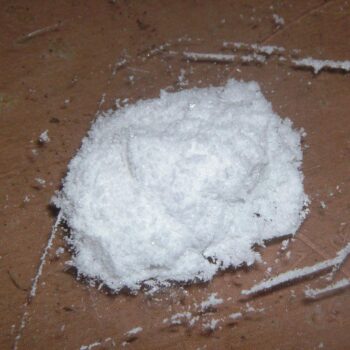
Appearance: A white, odorless, crystalline powder with a saline, bitter taste .
Usage Areas for Research Purposes
The scope of oxycodone research is broad and continues to evolve. Current applications include:
-
Pain Pathway Elucidation: Investigating central and peripheral pain mechanisms.
-
Opioid Pharmacology: Studying receptor binding affinities and signal transduction.
-
Pharmacogenetics: Exploring how genetic variations (e.g., in CYP2D6 metabolism) affect opioid response and safety, a key step toward personalized medicine .
-
Drug-Drug Interaction Studies: Assessing the synergistic or antagonistic effects of other compounds, such as the potential opioid-sparing effects of cannabidiol (CBD) .
-
Post-Operative Pain Models: Developing improved, multi-modal analgesic protocols for surgical recovery .
By providing a consistently pure and well-characterized product, we aim to support your research endeavors, helping to push the boundaries of scientific knowledge and ultimately contribute to safer and more effective therapeutic options.




There are no reviews yet.