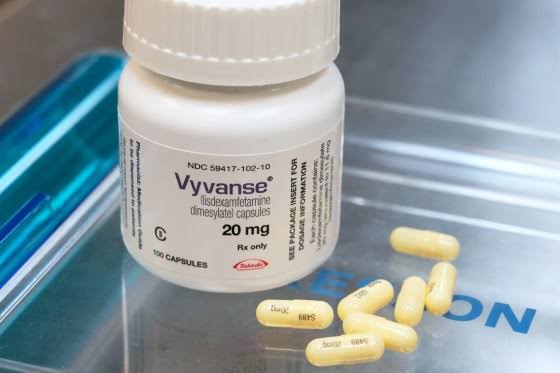
Vyvanse is a stimulant medicine used to treat ADHD and binge eating disorder. It works by helping increase focus and reduce impulsiveness and hyperactivity in people with ADHD, and by helping people with binge eating disorder overeat less often. People take it by mouth once a day in the morning, either as a capsule or a chewable tablet, since taking it later can make it hard to sleep. Some common side effects are decreased appetite, trouble sleeping, and dry mouth. Because lisdexamfetamine can raise blood pressure and heart rate and carries a risk of misuse and dependence, it’s important to take it exactly as prescribed and tell your doctor about any heart or mental health history first.
Overview: Lisdexamfetamine is a stimulant medicine used to treat ADHD and binge eating disorder. It works by helping increase focus and reduce impulsiveness and hyperactivity in people with ADHD, and by helping people with binge eating disorder overeat less often. People take it by mouth once a day in the morning, either as a capsule or a chewable tablet, since taking it later can make it hard to sleep. Some common side effects are decreased appetite, trouble sleeping, and dry mouth. Because lisdexamfetamine can raise blood pressure and heart rate and carries a risk of misuse and dependence, it’s important to take it exactly as prescribed and tell your doctor about any heart or mental health history first.
Uses
What is lisdexamfetamine used for?
Lisdexamfetamine is commonly used for treatment of the below conditions.
- Attention deficit hyperactivity disorder (ADHD), a condition that affects people’s ability to focus and self-control
- Binge eating disorder, a condition where people can not stop eating, even when they feel very full
Lisdexamfetamine may also be used for other conditions as determined by your healthcare provider.
How does lisdexamfetamine work (mechanism of action)?
Lisdexamfetamine is part of a group of medicines called stimulants. If you have attention deficit hyperactivity disorder (ADHD), this medicine can help increase attention and decrease impulsiveness (acting without thinking) and hyperactivity. If you have binge eating disorder, it can help you to overeat less often. The exact way that lisdexamfetamine works in the body to treat these conditions is not known.
How is lisdexamfetamine supplied (dosage forms)?
Lisdexamfetamine is available as Vyvanse and generic lisdexamfetamine in the following dosage forms that are taken by mouth.
- 10 mg, 20 mg, 30 mg, 40 mg, 50 mg, 60 mg chewable tablets
- 10 mg, 20 mg, 30 mg, 40 mg, 50 mg, 60 mg, 70 mg oral capsules
How should I store lisdexamfetamine?
Lisdexamfetamine should be stored at room temperature, between 68 F to 77 F (20 C to 25 C). It can be exposed to temperatures between 59 F to 86 F (15 C to 30 C) for shorter periods of time, such as when transporting it. Store it in a cool, dry, and safe place like a locked cabinet, in a tightly closed container. Protect it from light.
If you need to dispose of lisdexamfetamine, bring it to a medicine take-back program at an authorized collection site, such as a pharmacy or police station. If no take-back program is available, mix it with a nontoxic and unattractive substance such as dirt, cat litter, or used coffee grounds, and place it in a container like a sealed plastic bag. Throw away the mixture in household trash.
Side Effects
What are the most common side effects of lisdexamfetamine?
The most common side effects of lisdexamfetamine are listed below, which vary depending on why lisdexamfetamine is prescribed. Tell your healthcare provider if you have any of these side effects that bother you.
Treatment of Attention Deficit Hyperactivity Disorder (ADHD).
- Decreased or loss of appetite
- Anxiety
- Weight loss
- Diarrhea
- Dizziness
- Dry mouth
- Irritability
- Trouble sleeping
- Nausea
- Stomach pain
- Vomiting
Treatment of Binge Eating Disorder.
- Dry mouth
- Trouble sleeping
- Decreased appetite
- Increased heart rate
- Constipation
- Feeling jittery
- Anxiety
There may be other side effects of lisdexamfetamine that are not listed here. Contact your healthcare provider if you think you are having a side effect of a medicine. In the U.S., you can report side effects to the FDA at www.fda.gov/medwatch or by calling 800-FDA-1088. In Canada, you can report side effects to Health Canada at www.health.gc.ca/medeffect or by calling 866-234-2345.
What are the serious side effects of lisdexamfetamine?
While less common, the most serious side effects of lisdexamfetamine are described below, along with what to do if they happen.
Misuse and Addiction. Misusing lisdexamfetamine can lead to substance abuse problems, overdose, and death. Misuse means taking a medicine in a way other than how it was prescribed. Take lisdexamfetamine exactly as prescribed. Do not take extra lisdexamfetamine. Do not snort or inject lisdexamfetamine. You can become dependent on lisdexamfetamine even if you take it exactly as prescribed. Dependence means your body gets used to a medicine or other substance and then “needs” it or you will experience unpleasant withdrawal symptoms. Call your healthcare provider right away or go to the nearest emergency room if you have any of the following serious symptoms related to lisdexamfetamine misuse.
- Increased heart rate
- Increased blood pressure
- Fast breathing
- Sweating
- Trouble sleeping
- Feeling very energetic or restless
- Decreased appetite
- Shaking
- Trouble with coordination
- Flushed skin
- Stomach pain
- Vomiting
- Dilated (unusually large) pupils
- Feeling anxious
- Feeling angry or aggressive
- Thoughts of hurting yourself or others
Increased Blood Pressure and Heart Rate. Lisdexamfetamine can increase your blood pressure and cause your heart to beat too fast. Your doctor will check your blood pressure and heart rate before starting lisdexamfetamine and during treatment.
If you measure your blood pressure and the top number (systolic) is 180 mm Hg or higher or the bottom number (diastolic) is 120 mm Hg or higher, get medical attention right away. Increases in blood pressure may not be noticeable but look out for any of the following symptoms of severely high blood pressure.
- Sudden severe headache
- Chest pain
- Dizziness or confusion
- Trouble breathing
- Nausea/vomiting
- Blurry or other changes to vision
- Anxiety
- Buzzing in the ears
- Nosebleed
- Feeling of skipped heartbeats
If you measure your heart rate and it is more than 100 beats per minute for more than a few minutes while you are resting and not moving around, get medical attention right away. While you may feel no symptoms at all, watch for any of the following symptoms of a very fast heart beat.
- Dizziness
- Lightheadedness
- Shortness of breath
- Chest pain
- Heart palpitations, or feeling of skipped or extra heartbeats
- Racing heart
Mental (Psychiatric) Symptoms. Lisdexamfetamine can cause you to lose touch with reality (psychosis) or can cause an extremely elevated mood (mania). This can happen even if you have never experienced these symptoms before. Tell your healthcare provider about your mental health history and if mental health conditions run in your family. In particular, tell them if you or someone in your family has a history of depression, bipolar disorder, or suicide. Call your healthcare provider right away if you have any of the following symptoms of psychosis or mania.
- Dramatic increase in energy
- Significant trouble sleeping
- Your thoughts are racing and fast-paced
- Engaging in reckless behavior
- Having unusually grand ideas
- Feeling excessively happy or irritable
- Talking more or faster than usual
- Trouble thinking clearly
- Suspiciousness of others
- Changes in emotions (you feel emotions very strongly or you do not feel emotions at all)
- Hallucinations (you hear or see things that others do not)
- Delusions (you believe things that do not make sense to others, like you have special powers)
- You stop taking care of yourself
Slowed Growth in Children. Lisdexamfetamine can cause children to grow more slowly (both weight and height). Keep all appointments with your healthcare provider to check your child’s height and weight before they start taking lisdexamfetamine and during treatment.
Circulation Problems. Lisdexamfetamine can cause problems with your circulation, including Raynaud’s syndrome. Raynaud’s syndrome can cause your fingers and toes to feel cold, numb, and painful. Your skin might turn blue or pale when it is cold out or you are stressed, then turn red as you warm up. Tell your healthcare provider if you experience any of these symptoms. The circulation problems can result in wounds on your fingers or toes. Contact your healthcare provider right away if you notice any unexplained wounds on your fingers or toes.
Tics or Tourette’s Syndrome. Lisdexamfetamine can cause or worsen tics, which are short and repetitive movements or sounds like eye blinking or nose-twitching that can be hard to control. If you already have tics or Tourette’s syndrome (a condition where people have tics), lisdexamfetamine can make your symptoms worse. Tell your healthcare provider if you get any new worsening tics or worsening Tourette’s syndrome.
Serotonin Syndrome. Serotonin syndrome is when there is too much of a substance called serotonin in your body. Lisdexamfetamine can cause serotonin syndrome when it is taken alone or with other medicines that affect serotonin. This condition can be life-threatening. Get emergency help if you have any of the following symptoms of serotonin syndrome.
- Sweating, fever, or flushing
- Confusion
- Feeling agitated or restless
- Seeing or hearing unusual things
- Dizziness
- Fast or racing heartbeat
- Nausea, vomiting, or diarrhea
- Muscle twitching, stiffness, or tremor
- Seizures
Severe Allergic Reactions. Lisdexamfetamine may cause allergic reactions, which can be serious. Stop taking lisdexamfetamine and get help right away if you have any of the following symptoms of a serious allergic reaction.
- Breathing problems or wheezing
- Racing heart
- Fever or general ill feeling
- Swollen lymph nodes
- Swelling of the face, lips, mouth, tongue, or throat
- Trouble swallowing or throat tightness
- Itching, skin rash, or pale red bumps on the skin called hives
- Nausea or vomiting
- Dizziness, feeling lightheaded, or fainting
- Stomach cramps
- Joint pain
Warnings & Precautions
Who should not use lisdexamfetamine?
Allergies to Ingredients. People who are allergic to any of the following should not use lisdexamfetamine.
- Lisdexamfetamine
- Vyvanse
- Any other medicine known as an amphetamine
- Any of the ingredients in the specific product dispensed
Your pharmacist can tell you all of the ingredients in the specific lisdexamfetamine products they stock.
Drug Interactions. Lisdexamfetamine should not be taken while you are using or have used certain other medicines. Before taking lisdexamfetamine, tell your healthcare provider about any prescription or over-the-counter (OTC) medicines, vitamins/minerals, herbal products, and other supplements you are using or have used recently. See the Interactions section for more details.
What should I know about lisdexamfetamine before using it?
Take lisdexamfetamine in the morning. Avoid taking lisdexamfetamine in the afternoon, because taking it later in the day can make it harder to sleep at night.
Do not split lisdexamfetamine tablets or capsules and do not try to take less than a full capsule or tablet at a time.